The Hidden Link Between Stress and Heart Health
The Hidden Link Between Stress and Heart Health
The Silent Threat: Deep-Dive into Stress-Induced Cardiac Risk
🧠 Extended Summary: Bridging Physiology and Mindset
Chronic stress is no longer a vague lifestyle complaint; it is a clinical driver of cardiovascular deterioration. Using advanced wearables like the S-Patch ExL, we can now map the heart’s “unspoken language” during emotional turbulence.
- Mechanisms: Chronic cortisol elevation leads to vascular inflammation and autonomic dysregulation.
- HRV Importance: Heart Rate Variability (HRV) serves as a critical biomarker for stress resilience.
- Long-term Data: 14-day monitoring detects patterns that 24-hour Holters consistently miss.
- Personalized Prevention: Shifting from crisis intervention to stress-targeted heart protection.
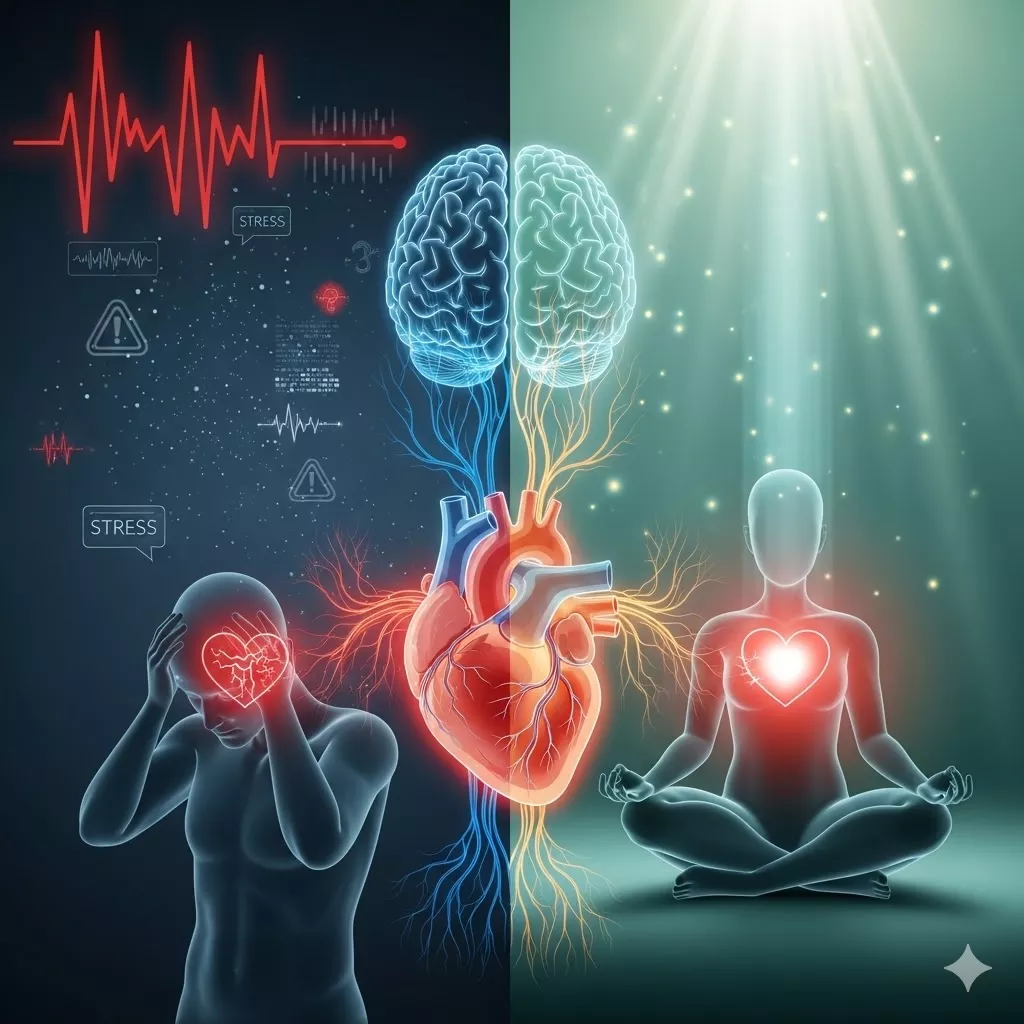
Stress is woven into modern life—deadlines, financial worries, and the constant buzz of notifications make it seem almost normal. Yet, behind the mental fatigue lies a physiological truth that doctors are increasingly acknowledging: chronic stress is a silent but powerful driver of heart disease. It acts as a catalyst for inflammation, arterial stiffening, and electrical instability.
For modern clinicians, the priority has shifted from simply acknowledging stress to actively detecting its impact before it triggers acute cardiac events. This is where continuous, at-home monitoring tools—such as the Wellysis S-Patch ExL—step in, revealing the hidden electrical fingerprints of stress that traditional tests fail to identify.
The Biological Cascade: How Stress Erodes Heart Health
When the brain perceives a threat, the sympathetic nervous system triggers the “fight-or-flight” response. Adrenaline increases the force of heart muscle contraction, while cortisol releases glucose for energy. However, when this system never shuts off, the heart stays in a state of high alert, leading to vascular wear and tear.
Research indicates that sustained stress results in autonomic dysregulation. The vagus nerve, which normally acts as a “brake” to slow the heart down, becomes less effective. This reduction in parasympathetic tone is often reflected in low Heart Rate Variability (HRV). Low HRV is not just a sign of fatigue; it is an independent risk factor for sudden cardiac death and new-onset arrhythmias.
S-Patch ExL: Mapping the 14-Day Stress Profile
Traditional 24-hour Holter recordings are limited. They offer only a “lucky snapshot” of a patient’s life. If a patient has a calm day while wearing the Holter, the clinician might miss the dangerous spikes in heart rate that occur during a high-stakes meeting or an emotional family conflict later in the week.
The S-Patch ExL overcomes this by providing 14 days of continuous, high-resolution monitoring. Weighing only 11 grams, this medical-grade patch captures how the heart recovers from stress over multiple sleep cycles and work weeks. By viewing 100% of the data, clinicians can identify circadian rhythm disruptions—such as the failure of the heart rate to “dip” during sleep—which is a strong predictor of future hypertensive crises.
Clinical Indicators of Stress-Driven Cardiac Risk
| ECG/Biological Marker | Stress Correlation & Risk |
|---|---|
| Atrial Ectopy (PACs) | Frequent short episodes of AFib triggered by catecholamine surges during work. |
| Low HRV (RMSSD) | Reduced ability of the heart to switch between states, indicating chronic burnout. |
| QT Interval Lability | Subtle changes in repolarization that can predispose patients to more severe arrhythmias. |
| Non-Dipping Heart Rate | Heart rate remains high during sleep, suggesting poor psychological recovery. |
The Intersection of Sleep and Cardiac Stress
Sleep is the heart’s primary period for repair. However, chronic stress often leads to “nocturnal sympathetic dominance.” Wearable ECG data from the S-Patch ExL frequently shows patients experiencing micro-arousals and bursts of tachycardia during the night. These are not just signs of a bad dream; they are physiological markers showing that the heart is working “overtime” when it should be resting. Identifying these nocturnal patterns is essential for preventing long-term cardiovascular fatigue.
Actionable Prevention: The Three-Pronged Strategy
The goal of modern monitoring is to translate data into measurable lifestyle changes. The S-Patch ExL supports a comprehensive preventative model:
- Behavioral Corroboration: By logging stressors in a smartphone app, patients help clinicians see if a spike in heart rate was a normal physical response to exercise or a dangerous emotional response to a trigger.
- Precision Pharmacology: Instead of general prescriptions, doctors can use 14-day data to determine if a patient needs a higher dose of beta-blockers only during certain high-stress hours.
- Autonomic Training: Objective heart data encourages patients to adhere to mindfulness or biofeedback, as they can see their HRV improve in real-time as they manage their stress.
Why This Matters for “Care‑at‑Home” Cardiology
Home‑based care is shifting from symptom‑driven crisis management to proactive oversight. Remote monitoring enables clinicians to see the “real life” heart—the one that deals with traffic, parenting, and work pressure. This context is vital because the heart in the clinic is rarely the same as the heart in the real world. By turning stress from an invisible risk into a measurable variable, we can significantly reduce the incidence of avoidable hospitalizations.
Bridge the Gap Between Mind and Heart
Empower your clinical practice with 14-day continuous ECG insights. See what happens when the clinic door closes.
Closing: A Single, Continuous Story
The hidden link between stress and heart health is no longer a theoretical concern; it is a monitorable reality. With the S-Patch ExL, Avittia is positioning technology as a bridge between mental wellbeing and cardiovascular stability. In an era of overwhelmed healthcare systems, keeping patients healthy at home—by understanding the stress that lives in their hearts—is the most impactful role any medical device can play.
⚕️ MEDICAL DISCLAIMER
This expanded article is for informational purposes and based on clinical research regarding the autonomic nervous system and chronic stress. Always consult your cardiologist regarding heart-related symptoms or diagnostic results.
Read Also