Reducing On-Board Medical Risks with Portable Diagnostics & Telemedicine
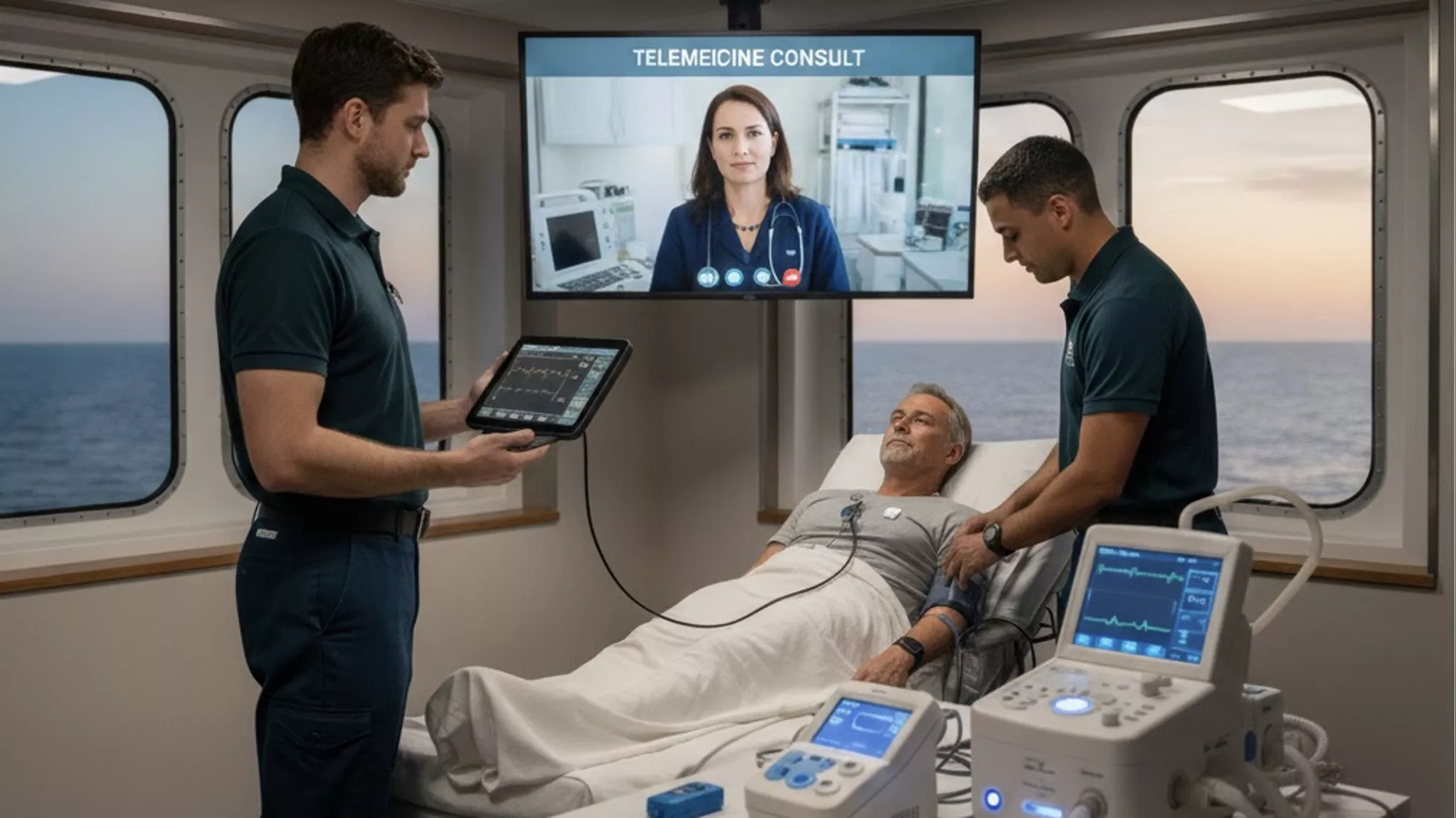
Reducing On-Board Medical Risks with Portable Diagnostics & Telemedicine
Revolutionizing maritime healthcare for the modern commercial fleet
Maritime ROI & Safety Impact
When an emergency strikes at sea, isolation is the greatest threat. Modern telemedicine bridges this gap.
- Cost Prevention: Medical diversions cost $200,000–$500,000 on average.
- Efficiency: Telemedicine reduces unnecessary evacuations by 30%.
- Accuracy: Hospital-grade diagnostics (ECG, Labs) available within minutes.
When a medical emergency strikes at sea, every second counts. Commercial vessels operating hundreds of miles from the nearest facility face unique challenges. For shipping companies, the stakes are high: medical emergencies result in costly diversions, crew incapacitation, and loss of life. Today, advances in portable diagnostic technology and telemedicine are transforming how vessels manage these risks.
The Maritime Medical Challenge
Commercial shipping crews face a distinct paradox: they work in physical, high-hazard environments while isolated from traditional healthcare infrastructure. A 2019 study in International Maritime Health confirmed that cardiovascular events and traumatic injuries are the most common serious emergencies at sea, with response times often measured in days rather than minutes.
The Portable Diagnostics Revolution
Modern devices bring hospital-grade diagnostics to the ship’s medical locker, providing clinical data that radio medical advice alone cannot offer.
🩺 CardioSecur Pro
A clinical-grade, 22-lead ECG system weighing under 200g. It connects to a tablet, allowing ECG data to be transmitted immediately to shore-based cardiologists for expert analysis.
⚡ Philips HeartStart FRx
Designed for harsh environments, this AED features an IP55 rating against water/dust and intuitive voice prompts to guide crew members through life-saving defibrillation.
🧪 Accu-Answer iSAW
A multi-parameter testing system providing laboratory-level diagnostics for infectious diseases and metabolic conditions within minutes, enabling rapid treatment.
🔬 Contec BC401
An automated urine analyzer that tests 11 parameters, allowing early detection of kidney issues, infections, and metabolic disorders while shipboard.
Telemedicine: Bridging the Distance Gap
Portable diagnostics achieve their potential when integrated with telemedicine platforms. Using satellite internet, vessels now connect with shore-based physicians for real-time video consultations. This allows doctors to visually assess symptoms and interpret data from devices like the CardioSecur Pro, ensuring informed treatment recommendations mid-ocean.
Essential Implementation Checklist
- Training & Protocols: Medical officers must be trained in device operation and remote consultation.
- Maintenance: Regular schedules to ensure readiness in harsh maritime conditions.
- Shore Support: 24/7 access to maritime medical assistance companies.
- Compliance: Alignment with IMO guidelines and flag state requirements.
The Business Case
Beyond humanitarian benefits, advanced medical capabilities deliver tangible ROI. With evacuations costing upwards of $100,000, preventing even one unnecessary diversion justifies the program costs. Furthermore, many insurers offer premium reductions for vessels equipped with advanced telemedicine suites.
Sources & References
- International Maritime Health Association (IMHA) Guidelines.
- International Labour Organization (MLC 2006).
- University of Texas Medical Branch (UTMB) Maritime Services.
- CardioSecur Pro Technical Specs & Philips Healthcare FRx Data.
Disclaimer: This article is for informational purposes and does not constitute medical advice.
Read Also