Dot Inc. Presented ‘Inclusive AI’ Innovations at Microsoft Build 2025
Inclusive AI: Dot Inc. Unveils Dot Vista at Microsoft Build 2025
Bridging the Digital Divide with Tactile Graphics and Windows AI
💡Insights: The Power of Inclusive Innovation
- Dot Vista: First-of-its-kind app that makes PowerPoint presentations fully accessible via touch.
- Copilot+ Synergy: Leverages on-device Windows AI APIs for real-time slide summarization and image description.
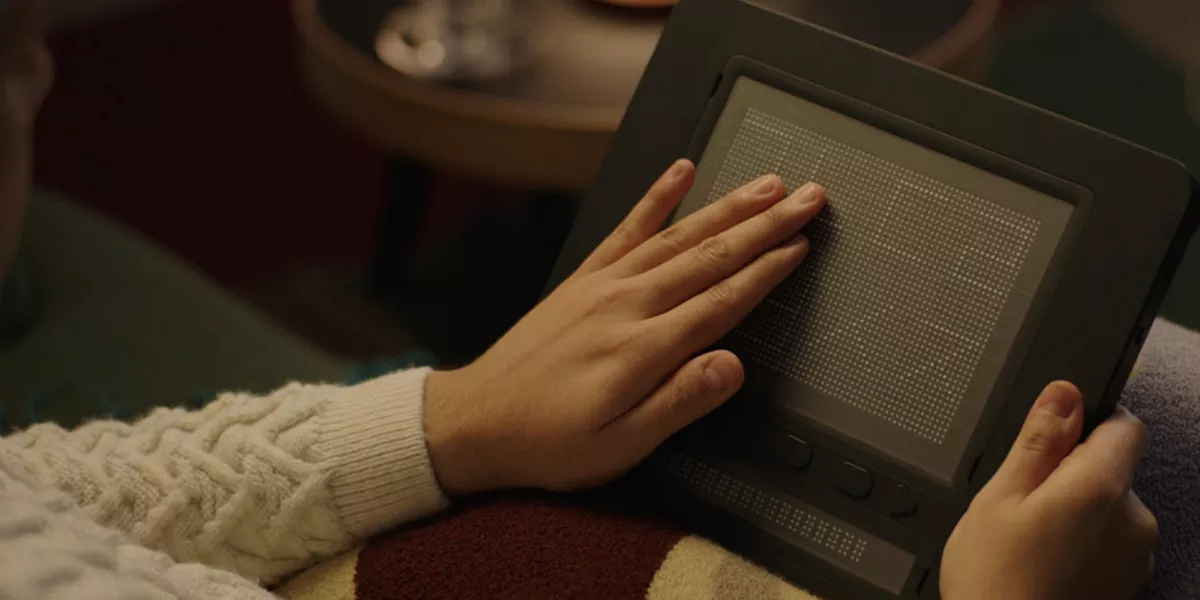
- The Dot Pad: A multiline tactile display capable of rendering complex 2D shapes, charts, and math formulas.
- Global Impact: Strategic partnerships with Oxford, Boston University, and RNIB to revolutionize education.
In a landmark moment for global accessibility, **Dot Inc.** took center stage at Microsoft’s annual developer conference, **@Build 2025**, in Seattle. On May 20, the South Korean tech pioneer unveiled **Dot Vista**, an accessibility solution that merges the high-performance computing of Microsoft’s Copilot+ PCs with the cutting-edge Windows AI Foundry technologies. This collaboration represents a significant leap forward in making digital content truly “visible” to the blind and visually impaired.
What is Dot Vista?
Developed by Dot Inc.’s AI team in partnership with Hanyang University, Dot Vista is the world’s first Windows accessibility application designed to bridge the gap between visual information and tactile perception. For decades, visually impaired users have relied on screen readers that process text but struggle with visual data—until now.
Dot Vista uses the tactile surface of the **Dot Pad** to convert complex digital visuals—such as PowerPoint slides, infographics, and intricate charts—into raised physical graphics and synthesized audio. This allows users to follow live presentations with the same level of detail and context as their sighted peers.
Traditional Braille vs. Dot Vista Tactile AI
| Feature | Traditional Devices | Dot Vista (AI Powered) |
|---|---|---|
| Content Type | Text & Braille only | Tactile Graphics, Charts, & Audio |
| Display Lines | Single line | Multiline (up to 7 lines/area) |
| AI Integration | None / Cloud-based | On-device Windows AI Foundry |
| Complexity | Simple text flow | Math, Code, Maps, & Drawings |
Harnessing the Power of Windows AI APIs
During a live demonstration at Build 2025, Dot Inc. showcased how Dot Vista utilizes three critical on-device AI APIs to process data instantly:
- Phi Silica API: This lightweight model quickly summarizes text-heavy slides, allowing the user to grasp the core message without getting lost in long paragraphs.
- Image Description API: It generates contextual descriptions of images and visuals within slides, providing the “why” and “how” behind the graphic.
- Text OCR API: It extracts data from charts and graphs, converting quantitative data into tactile structures that the user can explore by touch.
As Eric Ju-Yoon Kim, CEO of Dot Inc., explained: “We chose Windows AI APIs because their lightweight architecture allows for rapid extraction of key information without the latency or privacy concerns of complex LLM servers.”
The Dot Pad: A Haptic Revolution
The **Dot Pad** is the hardware core of this innovation. Unlike traditional braille displays that show a single line of text, the Dot Pad can render entire shapes. It enables blind parents to “feel” their children’s drawings, students to navigate maps, and professionals to analyze complex mathematical formulas and code snippets.
Dave Williams, an accessibility expert from the **RNIB**, highlighted its transformative potential: “Dot Pad delivers tactile access to images—from maps to music—and enables true collaboration between blind and sighted users. This is just the beginning of what AI can do for inclusion.”
Global Partnerships and Academic Endorsement
The vision of Dot Inc. extends into the world’s most prestigious lecture halls. By partnering with **Oxford University** and **Boston University**, Dot is co-developing a “Tactile Curriculum” that will change how blind students learn STEM subjects.
Maziar Zarrehparvar, a leading researcher at Oxford, noted: “We believe the future of personalized learning for visually impaired students will gain momentum through Dot’s advanced machine learning models. Oxford fully embraces this AI-based approach to education.”
Conclusion: Shaping an Accessible Future
At **Avittia**, we recognize that true innovation occurs when technology removes barriers rather than creating them. Dot Inc.’s presentation at Microsoft Build 2025 is a testament to the power of Inclusive AI. By turning the “visual” into the “tactile,” Dot Vista and the Dot Pad are not just helping people work—they are helping people connect with the world in a way that was previously impossible.
Explore the Future of Accessibility
Want to learn more about Dot Inc. products or inclusive technology?
⚕️ IMPORTANT DISCLAIMER
The information regarding Dot Inc. and Dot Vista is for informational and technological update purposes only. Accessibility solutions should be integrated into professional or educational settings following expert consultation to ensure the best individual user experience.